Customs, NCC Strengthen Alliance On Device Monitoring, Security, Public Safety
By Asuquo Nuwak
Customs, NCC Strengthen Alliance On Device Monitoring, Security, Public Safety
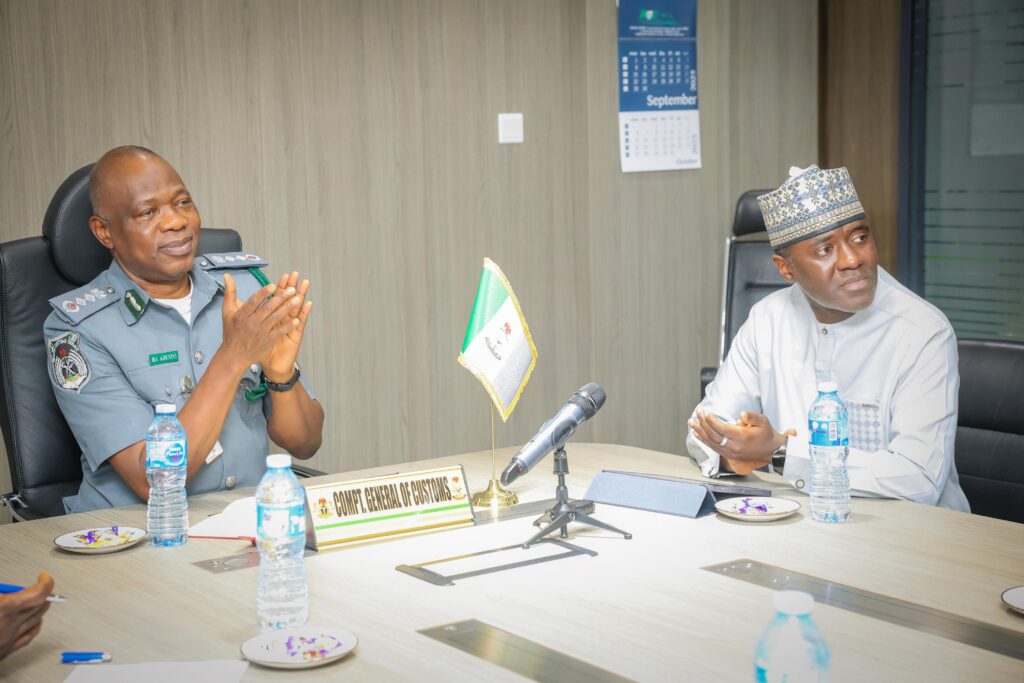
The Comptroller-General of Customs, Adewale Adeniyi, has pledged stronger collaboration with the Nigerian Communications Commission to improve revenue generation, enhance national security, and safeguard public safety through tighter monitoring of imported communication devices.
The CGC made this commitment on Tuesday, 30 September 2025, when he received the Executive Vice Chairman and Chief Executive Officer of the NCC, Aminu Maida, and his entourage on a courtesy visit at the Customs House, Maitama, Abuja.

Besides, CGC Adeniyi said the Service was already looking beyond revenue to the security implications of unchecked importation of mobile devices, adding that closer synergy with the NCC would allow both agencies to strengthen their monitoring systems.
Aside from this, he disclosed that technology-related imports, such as mobile phones, network boosters, and other telecom equipment, must be subjected to proper certification and classification under the customs’ tariff regime, noting that such measures would ensure only authorised importers are permitted to bring them into the country.

The CGC, who announced that the Service would work with NCC to train its officers on certification processes and align tariff codes with regulated devices to curb abuses at the borders, for effective security and revenue, also promised that the Service will be committed to deepening collaboration.
In the area of broader safety issues, the CGC noted the growing need for cooperation in maintaining facilities in highly populated urban areas.
He further observed that the concentration of high-rise buildings in Abuja, coupled with places of worship and sensitive institutions, demands vigilance and shared learning between both agencies to prevent disasters.

In his speech, the NCC boss congratulated Adeniyi on his election as Chairperson of the World Customs Organisation Council, describing it as recognition of his leadership both at home and abroad.
Maida emphasised that the NCC’s Device Management System, a platform designed to track imported phones and block substandard devices, would not only help Customs boost revenue, but will also enhance the quality of service for telecom subscribers.
Maida is quoted as stating that: “One of the least understood factors affecting service quality is the device itself. If a subscriber is using a substandard phone, no matter the investment operators make in their networks, service quality will remain poor. That is why the DMS project is critical”.
He further raised concerns over the uncontrolled use of network boosters, which, though sometimes helpful to individuals, often distort signals and reduce overall network quality.
He therefore called for Customs’ support in restricting the importation of uncertified boosters and ensuring only approved devices enter the market.

In addition to this, Maida said both agencies must continue to sustain the “spirit of collaboration” already established, while assuring that the NCC would work closely with Customs to tackle the dual challenges of revenue leakages and consumer protection.
About The Author