

PTML Customs Partners ICPC On Transparency
By Asuquo Nuwak
PTML Customs Partners ICPC On Transparency
•••As Comptroller Daniyan assures of faster clearance time
The Port and Terminal Multiservices Limited (PTML) Command of Nigeria Customs Service has partnered with the Independent Corrupt Practices and Related Offences Commission (ICPC) , to promote the virtue of transparency and uphold the fight against corruption
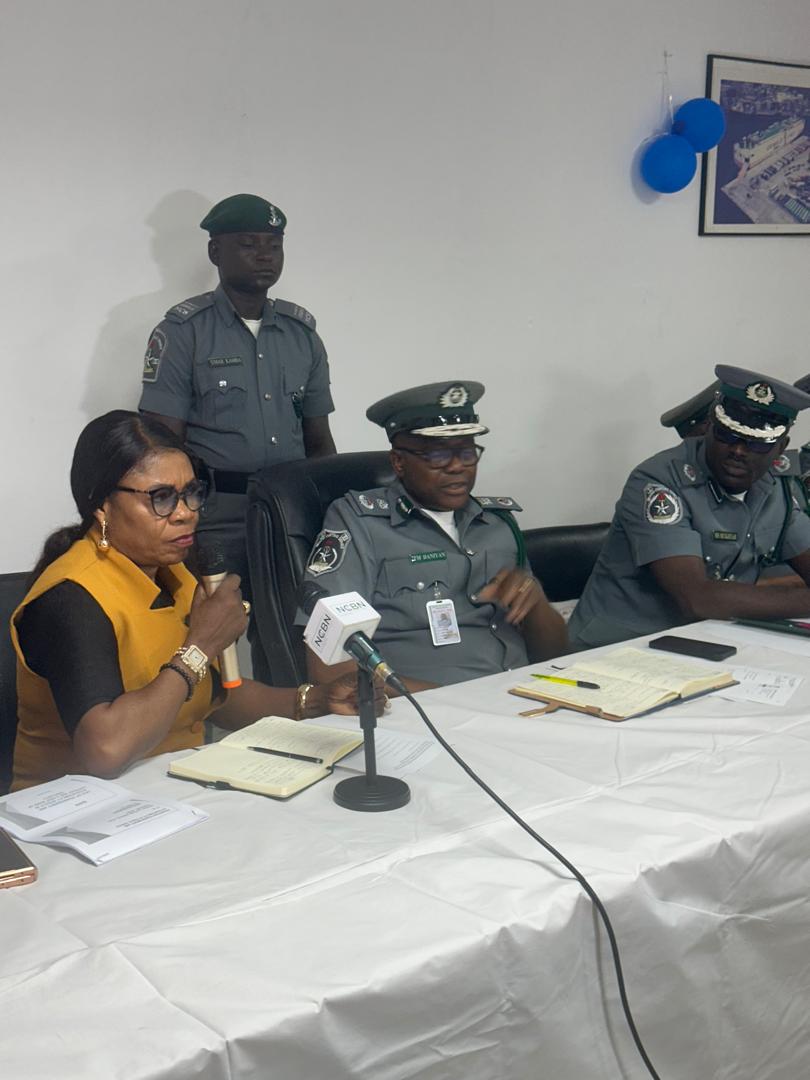
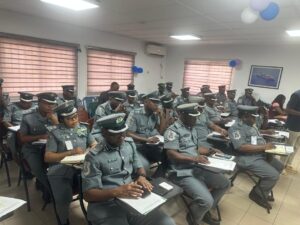
At a lecture facilitated by the Nigeria Customs Service south zone of Anti Corruption and Transparency Unit (ACTU) the Customs Area Controller of the Command, Comptroller Tenny Mankini Daniyan (Mnia) called on officers of the command to uphold the tenet of transparency as a way to promote fairness and productivity in the workplace.
He reminded the officers that the ongoing modernisation of the service which is being implemented transparently is capable of making the Service achieve better results in revenue collection, trade facilitation and anti smuggling.
The Customs Area Controller emphasised the importance of compliance with regulations, stressing that customs officers should see themselves as partners rather than adversaries.
Beside this, Comptroller Tenny Mankini Daniyan highlighted the crucial role of the command in revenue collection, trade facilitation, and anti-smuggling efforts. He stated that over 80% of the Service operations are automated to enhance efficiency and accountability.
Comptroller Daniyan also reaffirmed that the Service is one of the most transparent agencies in revenue collection, as all duties are paid directly into authorized dealer banks, leaving no room for manipulation.
He noted that the command is committed to surpassing it’s existing record of two hour cargo clearance time for compliant RoRo consignments, if the importers and agents cooperate more with sincere declaration and timely payment of duty
He disclosed that auditors from the office of the Auditor- General of the federation frequently review the command’s financial records at both the command and federal levels, while ensuring strict compliance with government policies.
He dispelled misconceptions that customs officials collect and divert government funds, asserting that the service operates with a high level of accountability, while encouraging officers to embrace ethical conduct and contribute positively to the agency’s mandate, and ensuring that the public perceives customs as transparent .
Chief Superintendent of the Independent Corrupt Practices Commission on public enlightenment and education, Mrs Mary Omonoyan, while lecturing the officers of the command on how they can build a culture of accountability and transparency in the Nigeria Customs Service, said that public institutions are established and run with public funds so it’s only fair that the public is adequately informed about their financial expenditure.
According to Mrs Omonoyan, corruption, as defined by the ICPC Act of 2000, includes bribery, fraud, forgery, impersonation, abuse of official property, over-invoicing, and even sexual harassment, an area the commission has strengthened by establishing a dedicated sexual harassment unit at the national level.
She also announced that corruption often stems from discretionary actions in promotions, appointments, falsification of official records , employment, and disciplinary processes. She said that the public officers have a duty to report bribery transactions, as outlined in Section 23 of the ICPC Act.
The ICPC official also pointed out the pillars of ICPC’s Anti-Corruption fight which the commission operates on which are enforcement, prevention, and public enlightenment
She said, to strengthen integrity in government institutions, the ethics and integrity compliance scorecard was introduced, assessing agencies on their transparency and ethical conduct. She revealed that the results of these assessments has helped to identify high-performing institutions and those requiring improvement.
She said, fostering transparency and accountability in public service builds public trust, enhances effectiveness, and promotes ethical conduct. She called on officials to practice integrity by making ethical decisions even when no one is watching
She encouraged officers to report infractions, resolve public complaints efficiently, and uphold the Nigerian Customs Service’s mission and values. She told officers to have clear job responsibilities, a strong chain of command, and an environment where accountability thrives, such as placing suggestion boxes in the command
At the end of the lecture, she said ICPC remains committed to fostering a corruption-free Nigeria through diligent enforcement, preventive measures, and nationwide enlightenment efforts.
About The Author


