MAJAN Roundtable: Ndigboamaka Traders Advocate For Traders Bank, Sustainable Economic Policy For Small And Medium Enterprises

By Asuquo Nuwak
MAJAN Roundtable: Ndigboamaka Traders Advocate For Traders Bank, Sustainable Economic Policy For Small And Medium Enterprises
In a move to address the challenges confronting traders and small businesses, the Ndigboamaka
Progressive Market Association, an umbrella body of 58 major markets in Lagos State, has expressed concern over the direction of Nigeria’s economy ahead of the 2027 general elections.

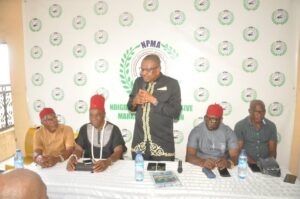
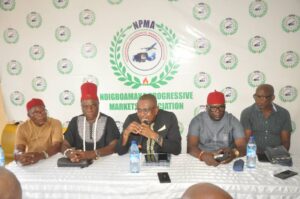
Comrade Chinedu Ukatu, the President of Ndigboamaka Progressive Market Association, who disclosed this during a media parley with members of the Maritime Journalists’ Association of Nigeria (MAJAN) in Lagos recently, also urged political leaders to implement sustainable economic policy to address problems facing traders and other related businesses.

During the roundtable meeting, he responded to pertinent questions on the state of the economy, the business environment and expectations from political office seekers.
Additionally, Comrade Chinedu Ukatu lamented the high cost of doing business in Nigeria, saying traders were worried about the country’s economic direction and lack of engagement between policymakers and the trading community.

Still, he said political actors have largely focused on power struggles, while neglecting issues affecting the economy, cost of living and welfare of traders.
Comrade Chinedu Ukatu is quoted as saying that: “We are worried about the 2027 election, as politicians are not concerned about how to improve the economy, infrastructure and the business environment”.


Ukatu expressed great displeasure over the introduction of government policies affecting traders without adequate consultation with stakeholders, thereby making it difficult for businesses to plan effectively.
That is not all, he cited foreign exchange instability as one of the major challenges confronting importers and traders, saying in developed economies businesses can project years ahead, while Nigerian traders operate under uncertainty economic conditions.

Besides, he called on politicians seeking elective offices in 2027 to articulate sustainable plans for economic growth and trade development.
Comrade Ukatu is quoted as saying that: “Trade is what drives the economy. Those seeking leadership positions should tell Nigerians exactly what they have in stock for traders and the economy”.
Comrade Chinedu Ukatu, who admitted that Nigeria’s economic and political challenges stem largely from poor leadership, also expressed optimism that the country’s fortunes could improve significantly if competent leaders emerge in 2027.
In the words of Comrade Chinedu Ukatu: “If we get the right leadership, right policies, the economy will improve”.
Commenting on the challenges facing Small and Medium Enterprises (SMEs), Ukatu identified high lending rates, multiple taxation, poor infrastructure, unfriendly trade policies and lack of government support as major obstacles hindering business growth.

However, he said many traders are unable to access affordable credit, while poor road networks and extortion by non-state actors increase the cost of doing business.
Ukatu is quoted as adding that: “Most markets lack basic infrastructure, while traders build roads, provide security and even maintain facilities by themselves, yet they are heavily taxed”.
Importantly, Ukatu further expressed great displeasure over the absence of meaningful collaboration between government agencies and traders, pointing out that many SMEs which aspire to move into manufacturing and export businesses are constrained by inadequate government support.
In finding lasting solutions to the problem, he therefore called for the establishment of a dedicated traders bank, jointly owned by government agencies and traders to provide low-interest or single-digit loans to Small and Medium Enterprises.

According to him, such an institution is expected to help businesses access affordable financing, expand operations and create jobs.
Once again, he also advocated for greater involvement of traders in policy formulation, saying business owners should be consulted before decisions affecting trade and commerce are made and implemented.
In his comment on national unity, Ukatu said his association had inaugurated a sensitisation committee to promote peaceful coexistence among traders across ethnic and religious groups.
He argued that commerce thrives in an environment where there is cooperation rather than division.
He accused politicians of exploiting ethnic and religious sentiments for political gains.
Comrade Chinedu Ukatu is quoted as saying that: “For traders, business comes first, customers buy goods based on quality and affordability, not the tribe of the seller. We are preaching unity, as trade is about partnership and mutual prosperity”.
In his comment during the MAJAN roundtable meeting, the President of the Maritime Journalists Association of Nigeria (MAJAN), Mr. Jerry Aguigbo, commended the Ndigboamaka
Progressive Traders Association for its contributions to Nigeria’s economic development in the area of trade and entrepreneurship.
Accordingly, Comrade Aguigbo praised the association’s role in facilitating commerce, creating jobs and sustaining economic activities across the country, noting that traders remain critical stakeholders in national economic growth.
He also urged both organisations to strengthen collaboration in promoting policies and initiatives that would enhance trade facilitation, economic development and national prosperity.
In his presentation, Comrade Ukatu also stressed the importance of maritime journalism to the nation’s economy, describing maritime journalists as key players in exposing challenges and promoting reforms in the sector.

He therefore urged journalists to remain professional, objective and united, while warning against unhealthy rivalry among associations.
Indeed, he said a stronger partnership between the media and the trading community would help advance policies that support economic growth and improve the business environment in Nigeria.
About The Author